Silk and Sensibililty
A retelling of Jane Austen's Sense and Sensibility set in Ming-dynasty China.
In a world shaped by expectation and reputation, sisters Ailin and Meilin must decide how much they are willing to sacrifice for love. As dowries, duty, and societal pressure loom large, both sisters discover that courage looks different for each woman.
A sweeping story of loyalty, longing, and learning when to follow your heart.
Special Pre-order swag offer!
Everyone who pre-orders Silk and Sensibility or suggests the book to their local library is eligible to receive a set of character art cards, featuring art by Clara Li Kartchner. All you need to do to claim the character art cards is fill out the Google form:
https://forms.gle/91MZiBoib13CYzzaA
The form closes on September 15.
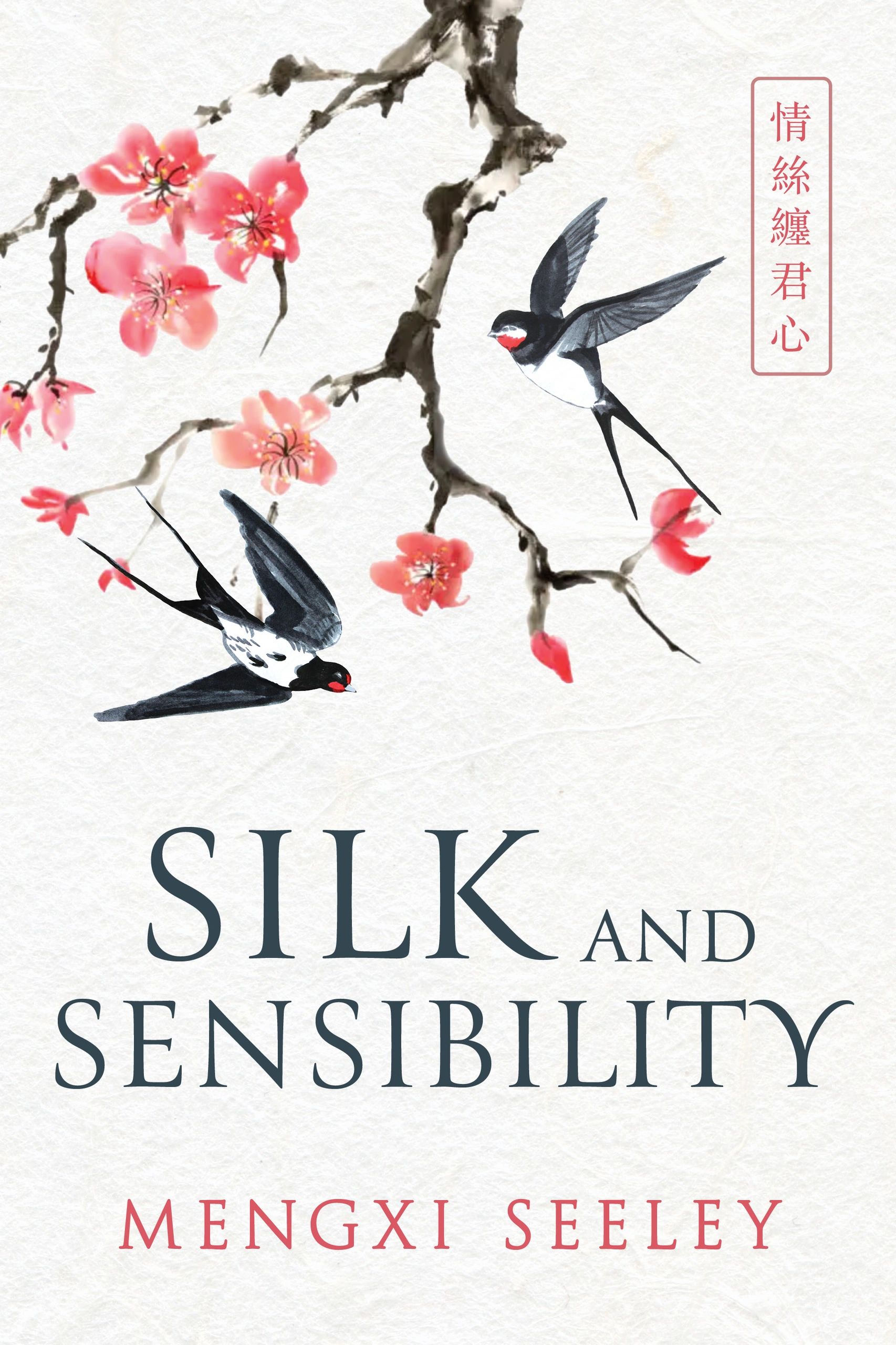
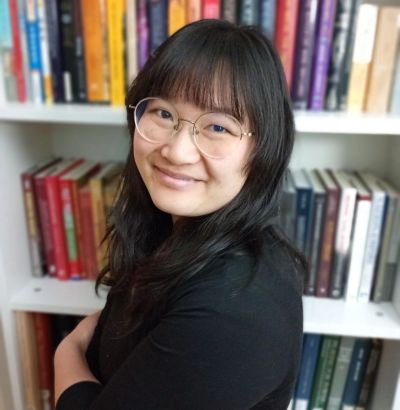
Silk and Sensibility is available September 15, 2026
Tara: So, Mengxi, I would love to hear your Meet Cue for Silk & Sensibility. When, where, and how did inspiration first strike?
Mengxi: A couple years ago, I saw one of my favorite authors post on Instagram that she was writing a retelling of Pride and Prejudice set in 18th-century Korea (the book is Behind Five Willows by June Hur, which came out earlier this year). As a K-drama fan, I got really excited about June Hur’s announcement, but I also had the thought, “I wish someone would write a Jane Austen retelling set in historical China.”
When my husband found out what I was thinking, he encouraged me to do just that: write a Jane Austen retelling set in historical China. He pointed out that I had been a Jane Austen fan ever since I was a teenager (I think he found out when he found a picture of me holding a copy of Northanger Abbey in the high school yearbook at my parents’ house) and I was qualified to do the research necessary to write historical fiction because I had studied Chinese history at Stanford during my MA program in East Asian Studies.
The more I considered the idea, the more it felt right. Imagining Jane Austen’s beloved characters in a completely different time and place to explore the universality of classic themes (while adding a dash of romance and unambiguously happy endings) felt intellectually stimulating, meaningful, and also fun!
Tara: Well, I’m glad you decided to go for it! It’s a wonderful story, and you really brought it to life. I was lucky enough to hear you give a class a few years ago where you talked about researching for writing. And since you have background studies in East Asian history, this is something of an area of expertise for you. What was the most fascinating research rabbit hole you went down while drafting Silk & Sensibility?
Mengxi: Thank you so much for attending my class! I love historical research and believe history is an invaluable resource for writers of all genres and humans in general.
One interesting tidbit I learned while drafting Silk and Sensibility comes from the book Every Step a Lotus by historian Dorothy Ko. Footbinding, the practice of breaking and bandaging girls’ feet so they could fit in shoes mere inches in length, was common among the upper classes in China from the thirteenth to the nineteenth centuries (Ko, 12). In the West, footbinding has been stereotyped as exotic and barbaric, a practice that crippled women, a symbol of nothing but female exploitation under a patriarchal system.
The real history was more complicated.
While historical China was undeniably patriarchal and footbinding definitely was a painful practice, textual records by women and for women suggest that women played an agentic role in passing on the tradition of footbinding. Actual shoes for bound feet include lacquered rain boots and soles caked with dirt, suggesting that women with bound feet spent time outside or even worked in fields (Ko, 10). This evidence shows that historical Chinese women were strong and capable, even in the face of great challenges.
Many of my female characters have bound feet, but it is presented as just another facet of their lives, not the defining characteristic and not something that makes them exotic. I want my fiction to be rooted in research, nuanced and multidimensional, never stereotypical or exoticized.
Tara: I love this and felt that your novel did exactly that, so great job. Now, since Silk & Sensibility is a reimagining of Sense & Sensibility, what was the most challenging part of matching up two stories that take place in two very different times and locations?
Mengxi: The most challenging part of fitting Sense and Sensibility into a 16th-century Chinese world was coming up with historically believable and socially appropriate ways for my female and male characters to meet. Upper class women in Ming China were more confined to their homes than ladies in Regency England and there were no balls where men and women could mingle.
My solution was to create a strong grandmotherly character (inspired by Mrs. Jennings) who takes all the young people under her wing and provides a place where extended family and friends can gather.
Tara: Do you have a favorite character in the story? And why?
Mengxi: Besides Grandmother Jiang, the character mentioned above who brings everyone together, I am torn between my main characters Ailin and Meilin. They are sisters who care deeply about each other’s happiness but have conflicting views on whether propriety or passion is a surer path to desired outcomes.
Ailin is the eldest daughter who values family harmony above all else, even if it means sacrificing romantic love. Meilin is the middle daughter who believes in being true to her heart even if it causes conflict with others. It was really fun to write two POV characters who were so different in their values while trying to make each fleshed-out and reasonable in their own minds.
Tara: What do you hope your readers will take away from the experience, especially those who are big Jane Austen fans?
Mengxi: Jane Austen’s books resonated with me when I was a teenager even though the author was a White woman writing in early 19th-century England and I was a Chinese American girl reading in 21st-century Utah. My goal in writing Silk and Sensibility was to explore how the classic themes of Sense and Sensibility would be shaped if dropped into a different time and place. My hope is that readers of Silk and Sensibility will learn about a less well-known setting in English-language publishing while enjoying a familiar story. In the process, I hope they get a deep sense of the universal and timeless nature of human emotions like familial and romantic love.
Tara: Yes! That’s huge and it’s something I truly believe books do so well—they can teach us about people who are different from us, while still showing that we are all the same down deep in our desires and feelings and needs. It’s such a wonderful and uniting experience and why more people should read! I think you’ve accomplished that in an exceptional way. So, finally, tell me: what are you most proud of in this story?
Mengxi: This might be a random nerdy detail, but I am inordinately proud of the epigraphs at the beginning of each chapter. Styled as unsent letters from Enze, the modest and gentle scholar who falls in love with Ailin, they are printed in both Chinese and English. Some of the letters contain classic Chinese poems. The oldest poem is about two thousand years old, from the Classic of Poetry (Shijing 诗经). All the English versions of the poems are original translations by me, and even though I’m not a good poet, it just warms my heart that my book might connect readers to poetry from thousands of years ago.
Credit where credit is due: adding epigraphs from the male love interest’s perspective was my editor’s idea. I think her idea was brilliant because the letters really highlight his yearning when he is physically apart from the female lead. (I’m biased because it’s my book, but I’m slightly swooning.) Another credit goes to my mom, who helped me a lot with the Chinese parts of the epigraphs that were original prose and not classic poems.
Tara: That really is amazing and sets the book apart so much. I love that you did the translations on your own! It makes it so special, and what a treat that we can enjoy words from poets from so long ago. Thank you so much for chatting with me about your book. Best of luck on your debut, and I can’t wait for readers to dig into this one!